
Ballot 2026 Series


Public Records Requirements for Legislature and Governor’s Office Initiative
Did you know that Massachusetts is one of a few states in the country where the state legislature and the governor’s office can keep most of their official records private? Now, voters have a chance to change that.
By Ellen Mandel-Steiner. Published August 3, 2026.
The Massachusetts Public Records Requirements for Legislature and Governor’s Office Initiative is officially on the ballot as Question 1 for the November 3, 2026 election. If it passes, it will expand the state's public records laws by removing certain special exemptions for top elected officials.
At a glance: What’s at stake?
This proposed law would prevent top state officials from shielding records citing automatic privacy rules. If passed, the law would open up internal operations to public view, while still protecting lawmaker-constituent privacy and early policy ideas.
Breaking down your vote
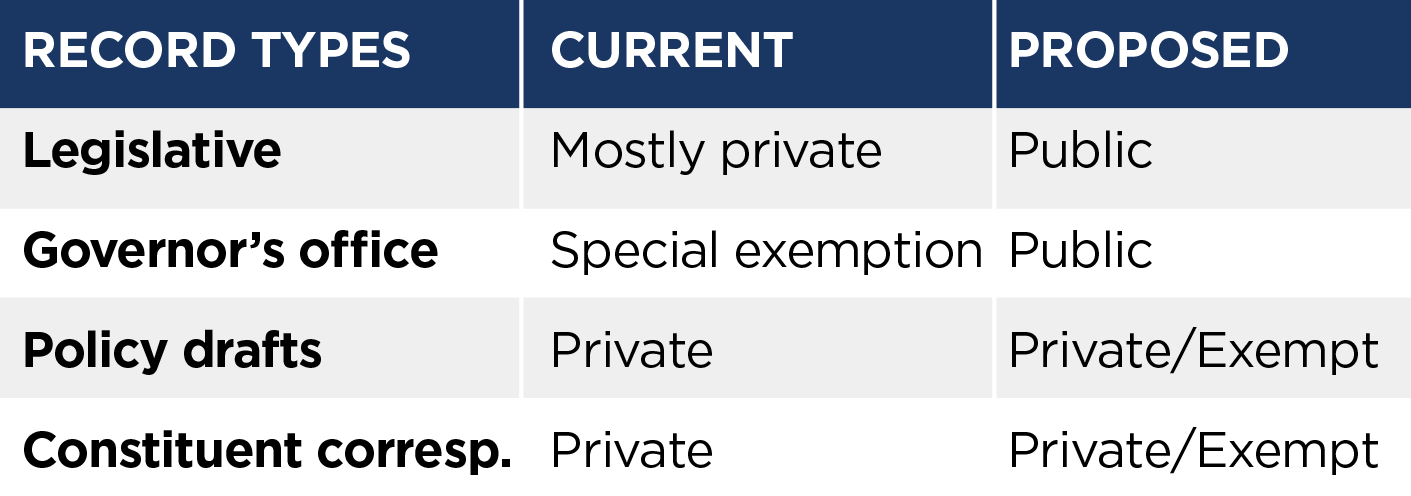
Voting YES would require lawmakers in the State House and Senate and the Governor’s Office to follow the same public-records rules as other state government offices.
Passing the ballot measure would:
Remove privacy rules for lawmakers: Removes special legal exemptions for the state House of Representatives, the Senate, legislative leaders, and committees.
Include records from the Governor’s Office: Changes long-standing rules so that emails, documents, and administrative files from the Governor's Office can be requested by the public.
Add official oversight: Gives the state's Public Records Division and courts the power to make sure lawmakers and the Governor hand over requested documents.
Retain two specific exemptions: Continues to protect two main types of records from public access:
Brainstorming and drafts: Internal notes and ideas used while creating new policies before they become final.
Help for local residents: Private emails and correspondence between residents and their local state representatives about personal issues or help with state services.
Voting NO would keep the rules as they are now.
Under the current system:
Lawmakers’ records remain private: The state legislature remains exempt from public records laws.
Governor decides what to share: The Governor's Office retains full legal control over whether or not to voluntarily release internal records.
Limited oversight: Only state public records overseers can force regular state agencies and city offices to share documents—not top state leaders.
How did we get here?
LEGAL FRAMEWORK AND HISTORICAL EXEMPTIONS
Under Chapter 66 of Massachusetts law, government agencies must show public records to anyone who asks. However, past court decisions—specifically a major decision called Lambert v. JNC—ruled that the Governor's Office isn't technically an "agency." Because of this, Massachusetts is currently the only state in the country where the governor, legislature, and state court system are all exempt from basic public open-records laws.
Pros/cons
ARGUMENTS IN FAVOR
Supporters argue that secrecy hurts public trust. They maintain:
Rebuilding trust: Allowing citizens access to records helps voters understand how decisions are made, how committees vote, and how your tax dollars are spent.
Catching up with other states: Over 40 states already require their states’ executive branches to share public records, so this would allow Massachusetts to catch up with the rest of the country.
Watching special interests: Public records access make it easier for citizens to track how lobbyists and big donors influence state lawmakers.
ARGUMENTS AGAINST
Critics voice concerns about how open records access to government functions might affect negotiations:
Constitutional issues: Opponents argue that permitting outside agencies or courts review legislative files violates the separation of powers set by the Massachusetts Constitution.
Detrimental to private debate: The inability of lawmakers to brainstorm or negotiate in private might impede honest discussions and the ability to make necessary compromises.
Extra time and costs: Handling massive amounts of public email requests would consume staff time, cost extra taxpayer money, and create legal delays.
Deep dive: real-world impact
If this law passes in November, several big changes will take effect:
For the Legislature: Lawmakers and leadership offices will need to hire or designate staff to organize communications and answer public record requests.
For the Governor’s Office: Future governors will be required to follow mandatory public-release rules instead of choosing what to share, thereby opening their work product to reporters and the public.
For journalists and watchdogs: News media and advocacy groups will have legal tools to demand state records and to require the government to demonstrate why a record should be kept off-limits.
For the judiciary: State courts will inevitably hear cases to determine where public access ends and protected policy drafts or privacy rights begin.
National perspective
On their 2026 ballots, Massachusetts stands out due to this debate over public record access. Most states have included top elected officials in public records laws for a long time. Today, Massachusetts is one of only two states (alongside Michigan) that protects both its governor and legislature from these rules—making Question 1 a major national test for transparency reform.
Summary
Massachusetts Question 1 (2026) comes down to:
A "Yes" vote would require the state legislature and Governor's Office to comply with public record requests while still protecting personal resident communications and early policy drafts.
A "No" vote would keep the current system and broad legal exemptions in place for legislative leaders and the governor.
On November 3, 2026, Bay State voters will make the final call on whether or not to expand public records.

Author recommendation

ABOUT THE AUTHOR
Ellen Mandel-Steiner is a North Andover resident.
Subscribers weigh in
Voting from August 3-10, subscribers were 87.5% in favor of the measure, with 12,5% voting against.
BoxfordDems Ballot-Measure Series
The BoxfordDems Ballot 2026 Series is our attempt at providing brief overviews of the various certified Massachusetts ballot initiatives as they pertain to our immediate region.
Overview of Ballot-Initiative Process (Christina Eckert)
Question 1
Expand Public Records Requirements for the Legislature and Governor’s Office? (Ellen Mandel)
Question 2
Permit Collective Bargaining for PCS Employees? (Christina Eckert)
Question 3
Adopt Top-Two State Primary Elections? (Terri Teleen)
Question 4
Permit Same-Day Voter Registration? (Eleanor Grigg Schoenberg)
Question 5
Change State Tax Revenue Limit Initiative? (Christina Eckert)
Question 6
Establish Nature-for-All Fund? (Jessica Grigg)
Question 7
Set Minimum Limit on Required Lot Size for Single-Family Homes? (Terri Teleen)
Question 8
Recriminalize Adult Recreational Use Marijuana? (Adam Steiner) (link)
Question 9
Uphold 2024 Act Modernizing Firearms Laws? (Julian Troake)
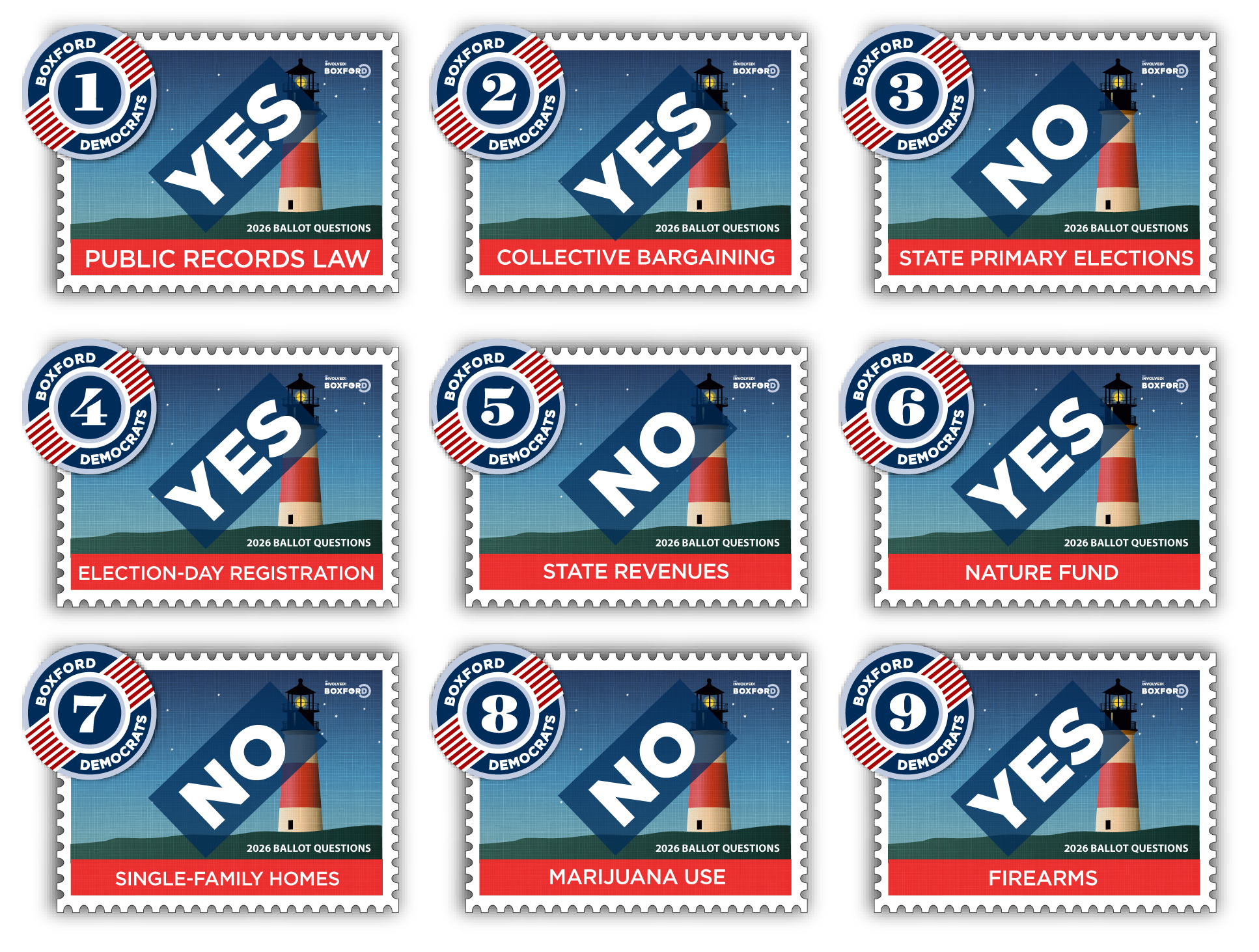
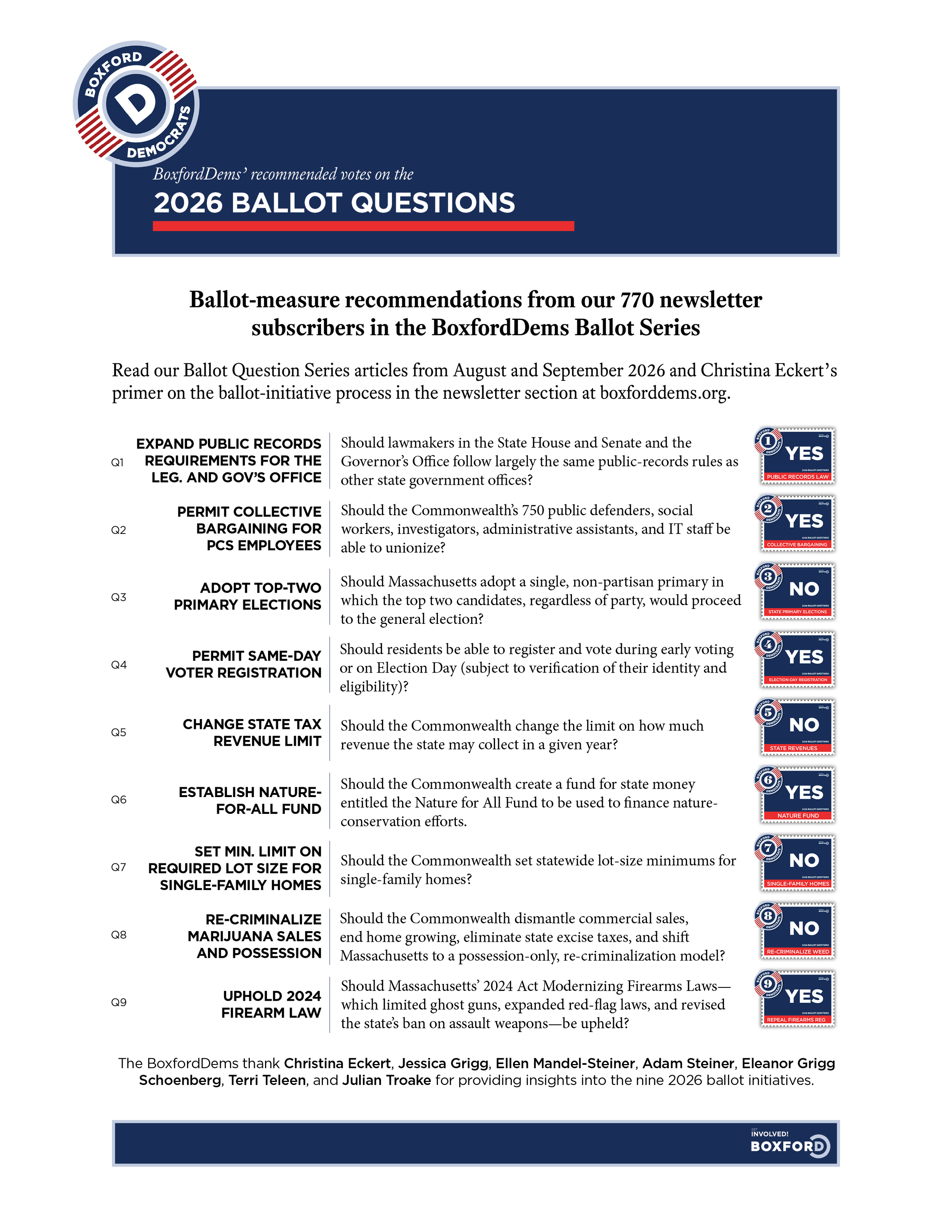
The graphic above represents our subscribers’ vote recommendations. The recommendations are also available as a PDF document, which is available for download here.
Opinions expressed in the series do not necessarily represent those of the Boxford Democratic Town Committee and should not be considered to be Committee endorsements of a particular policy or initiative. They are provided to promote healthy discussion and help voters make informed decisions at the ballot box
This week’s issue
General
Deprogramming MAGA? Ballot recommendations are in; Drinks with Dems; Apple Festival, Midterm tool!
Ballot-measure series
Overview of Ballot-Initiative Process (Christina Eckert)
Question 1 Expand Public Records Requirements for the Legislature and Governor’s Office? (Ellen Mandel)
Question 2 Permit Collective Bargaining for PCS Employees? (Christina Eckert)
Question 3 Adopt Top-Two State Primary Elections? (Terri Teleen)
Question 4 Permit Same-Day Voter Registration? (Eleanor Grigg Schoenberg)
Question 5 Change State Tax Revenue Limit Initiative? (Christina Eckert)
Question 6 Establish Nature-for-All Fund? (Jessica Grigg)
Question 7 Set Minimum Limit on Required Lot Size for Single-Family Homes? (Terri Teleen)
Question 8 Recriminalize Adult Recreational Use Marijuana? (Adam Steiner)
Question 9 Uphold 2024 Act Modernizing Firearms Laws? (Julian Troake)
Get involved
Drinks with Dems: Meet fellow Tri-Town Dems at Alfalfa Farm Cellars
Distribute 47 doorhangers and get a BoxfordDems swag bag
We’re getting out the Boxford vote with Blue Rides
Democrats and democracy-leaning organizations sharing regional calendar
Other great opportunities to get involved - nationwide
Campaigns